Agenda Day 2
8:55 am - 9:00 am
Chairperson’s Opening Remarks
Krishna Bagla -
Manager, Cyber Security Operations & Implementation,
NSW Government
Key Takeaways
- Updates from NSW Government regarding Digital Identity
- Navigating how digital identity policy translates into service delivery for citizens
- The role of community trust and public communication in digital identity adoption
- Where NSW sits in the national Digital Identity roadmap and what comes after 2026


9:00 am - 9:30 am
Fireside Chat: Privilege Creep Is Inevitable, Exposure Is Not
Siddharth Rajanna -
Head Chief Information Security Officer, Cyber Security,
BINGO Industries
Key Takeaways:
- Role sprawl, excessive entitlements and misaligned policies across hybrid estates.
- How organisations are tightening least privilege without paralysing productivity.
- Practical approaches to continuous entitlement review at scale
- Tooling and process combinations that are actually working in complex enterprise environments
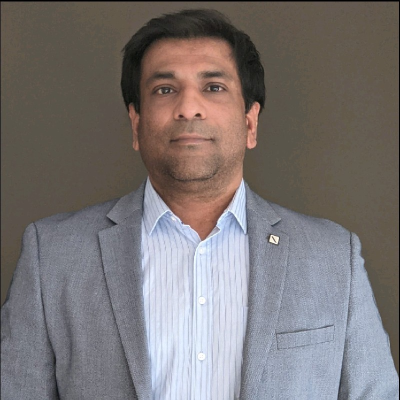

9:30 am - 10:00 am
Case Study: Trust Without Borders: Verifying Digital Credentials Across Australia and New Zealand
Cassandra Meagher -
Head of Policy and Transition,
Austroads
The Austroads Digital Trust Service is the infrastructure and service to enable mobile driver (mDLs) and digital credentials to be verified across jurisdictions.
The cross-border trust problem: verifying a digital credential issued in another state, in New Zealand, or by a global wallet provider
Inside the Digital Trust Service: the shared infrastructure underpinning a federated mDL ecosystem across Australia and New Zealand
Why standards matter: how ISO/IEC 18013-5, trust lists and governance make digital credentials verifiable and interoperable
The global picture and the user: the mDL momentum a growing global trend, and privacy, selective disclosure and user control by design


10:00 am - 10:30 am
Case Study: Securing Identity Data in Motion
Moh Rezaee -
Engineering Lead - Identity,
AGL Energy
Why real-time authentication flows, not data at rest, are where modern identity breaches actually happen
How distributed systems create hidden trust gaps that attackers exploit during authentication and transitions
Practical architecture principles for securing identity assertions, MFA enrolment, and session hand-offs at scale
Balancing strong security with the reality of diverse customer behaviours, from passkeys to shared households and legacy constraints


10:30 am - 11:00 am
Morning Recharge in the Expo
Why real-time authentication flows, not data at rest, are where modern identity breaches actually happen
How distributed systems create hidden trust gaps that attackers exploit during authentication and transitions
Practical architecture principles for securing identity assertions, MFA enrolment, and session hand-offs at scale
Balancing strong security with the reality of diverse customer behaviours, from passkeys to shared households and legacy constraints
11:00 am - 11:30 am
Case Study: Verifiable Credentials & Digital ID in Practice: What real-world applications actually demand?
Adnene Guabtni -
Principal Research Scientist/Engineer,
Commonwealth Scientific and Industrial Research Organisation (CSIRO)
Key Takeaways:
- How self-managed, verifiable credentials solve the fragmentation problem of physical and digital IDs.
- How decentralised architecture shifts trust from institutional custody to real-time, cryptographic verification of specific claims, from specific issuers, with the individual's consent.
- Field-tested conditions for decentralised identity to scale and have the most impact.
- A framework extending self-sovereign identity to AI agents, bringing human-managed, verifiable consent and accountability to today's largely identity-less agentic interactions.

Adnene Guabtni
Principal Research Scientist/EngineerCommonwealth Scientific and Industrial Research Organisation (CSIRO)

11:30 am - 12:00 pm
Case Study: VicRoads' Identity Journey in Practice
Crispin Blackall -
Chief Technology Officer,
VicRoads
Key Takeaways:
- What identity means now — building deeper levels of trust and providing individuals with greater security
- Building selfie-capture capability and continuous improvement of the verification experience
- Moving identity away from the physical card and why that transition is now genuinely tangible
- Edge cases and real-world friction encountered along the way


12:00 pm - 1:00 pm
Networking Lunch & VIP Hosted Lunches
Join us in the expo hall for a relaxed networking lunch with the full Digital Identity and IAM community. For invited guests, exclusive VIP lunches will run concurrently, bringing senior leaders and select partners together for high-impact conversations in a more intimate setting.